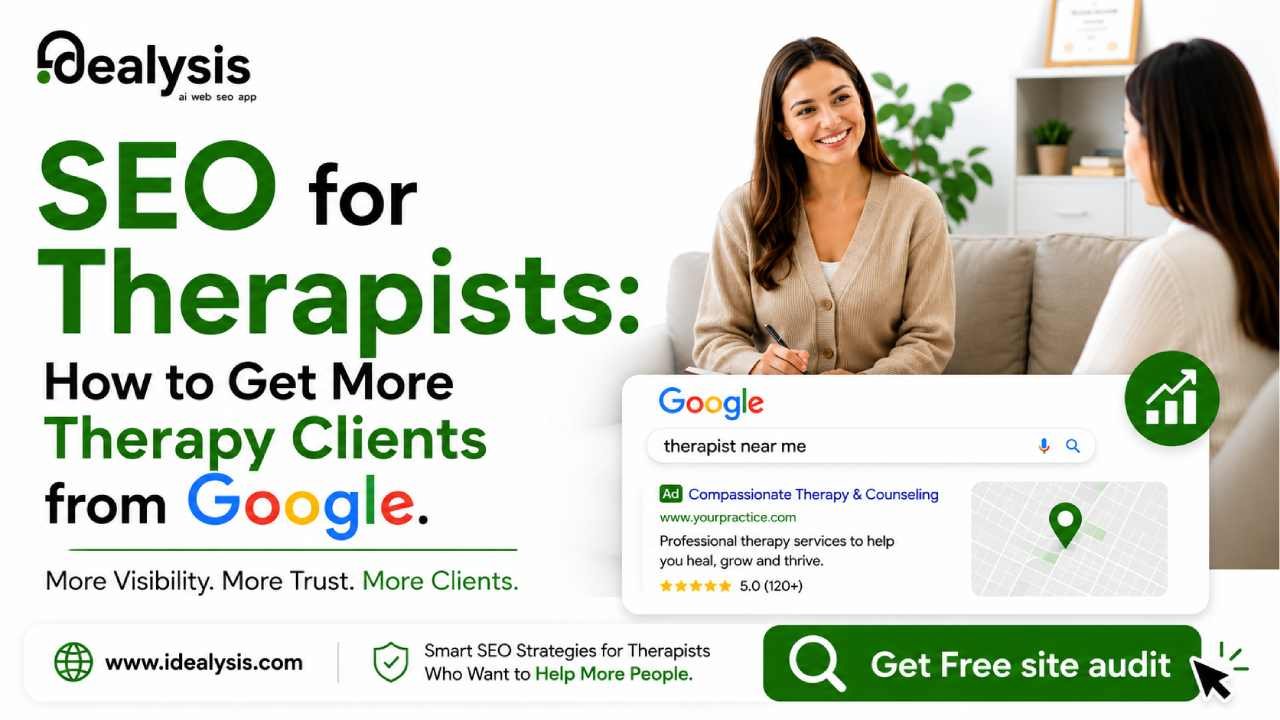
The most effective marketing strategies for therapists combine local SEO, an optimised Google Business Profile, a content-driven website, and a consistent referral system. Therapists who rank on Google Maps, maintain a strong directory presence, and publish condition-specific content attract qualified enquiries month after month — without relying on paid ads or expensive lead platforms.
Most therapists find marketing uncomfortable. It can feel at odds with the values that drew you into the profession — humility, service, the primacy of the client relationship. But every person who cannot find you is a person who may not get the help they need. Seen from that angle, good marketing is an ethical obligation, not a commercial one.
The marketing strategies for therapists that actually work are not complicated. They share two qualities: they build long-term assets (rankings, reputation, relationships) rather than paying for one-off traffic, and they respect the trust-based nature of the profession. This guide covers 15 of them — in plain terms, in order of impact.
Which Marketing Channels Work Best for Therapists?
Before diving into specific tactics, understand the landscape. Different channels serve different purposes. Prioritise by ROI and asset-building value.
Channel
ROI for Therapists
Asset or Rental?
Best For
Local SEO + Google Maps
Very High
Asset — you own it
Consistent long-term enquiries
Google Business Profile
Very High
Asset
Map Pack visibility, calls
Content / Blog
High (compounds)
Asset
Authority, early-stage clients
Referral network (GPs, schools)
Very High
Asset
Highest-quality leads
Email marketing
High
Asset
Re-engagement, retention
Psychology Today
Medium
Rental
Directory traffic supplement
Social media (organic)
Low–Medium
Rental
Brand awareness only
Google Ads (PPC)
Medium (expensive)
Rental
Short-term gap filling
Zocdoc / Headway
Medium
Rental
Volume, not quality
The table above reflects what experienced practice owners discover over time: invest in channels you own, and use rental channels sparingly as supplements. With that framework, here are the 15 strategies.
The 15 Proven Marketing Strategies for Therapists in 2026
1. Local SEO: Rank Where Clients Are Searching
The single highest-ROI marketing investment for a therapy practice.
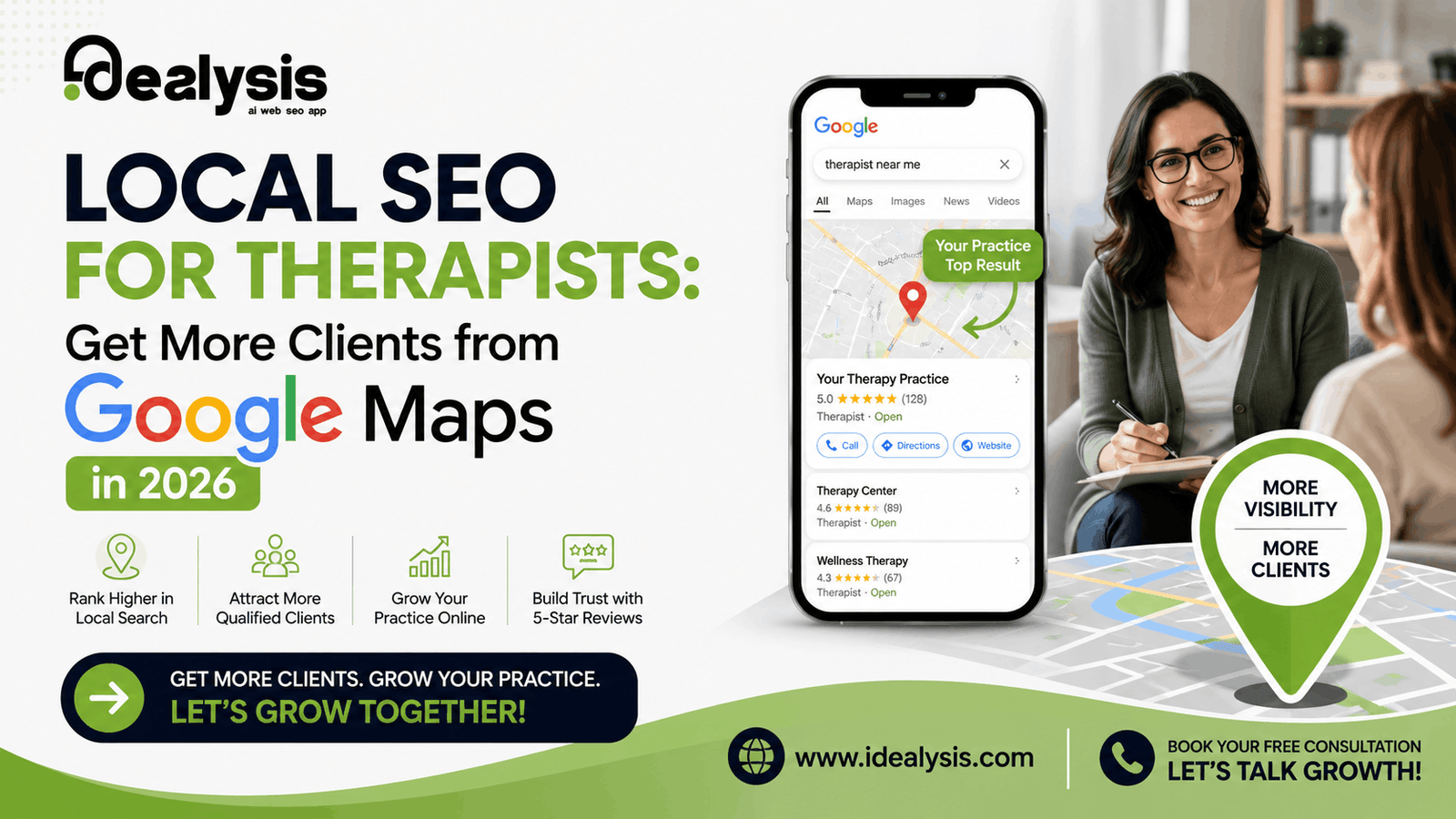
When someone types ‘anxiety therapist in Boston’ into Google, the first three map results capture the majority of clicks. Ranking there — without paying for ads — requires a fully optimised Google Business Profile, location-specific website pages, consistent NAP citations, and a steady flow of genuine reviews. A therapist in Seattle who invested four months in local SEO went from zero Map Pack presence to a top-2 ranking for her core keywords, generating 18 new enquiry calls per month.See how Idealysis delivers local SEO for service businesses →
2. Google Business Profile Optimisation
Your GBP controls your Map Pack ranking. Most therapists leave it half-finished.
Complete every field: primary category (choose ‘Psychologist’, ‘Counselor’, or ‘Mental Health Clinic’), services list, business description with your city and specialisations, 10+ photos, booking link, and weekly posts. An incomplete GBP is a suppressed GBP. This is the fastest single action to improve local visibility — changes can show results within four to six weeks.
3. A Website That Converts, Not Just Exists
Your website is your 24/7 intake coordinator. Design it to do that job.
Most therapy websites are too vague. ‘I help people heal and grow’ tells a searching client nothing. Your homepage needs to state your location, your specialisations, and who you help within the first screen. Every service page should target a specific condition + city keyword. Load time matters — over 3 seconds on mobile and you lose half your visitors before they read a word. Use a clear CTA above the fold: ‘Book a Free Consultation’ or ‘Check Availability’.Idealysis builds SEO-ready therapy websites →
4. Condition-Specific Service Pages
One page per condition you treat — this is where organic therapy traffic actually comes from.
Rather than listing all your specialisations on one page, create a dedicated page for each: anxiety therapy, depression counselling, trauma therapy, couples therapy, grief counselling, and so on. Each page should target ‘[condition] therapist [city]’, answer the reader’s real questions, explain your approach, and end with a clear booking CTA. A Chicago therapist who built eight condition pages went from 200 to 1,400 monthly organic sessions over ten months.
5. Content Marketing: Blogs That Build Trust Before First Contact
A well-written blog post works for you around the clock without any ongoing cost.
Condition-education content — ‘What Is CBT and How Does It Help Anxiety?’, ‘How to Know When You Need Therapy’, ‘What to Expect in Your First Session’ — attracts people early in their decision process. These visitors are not ready to book yet. But they remember your name when they are. Two posts per month at 1,000–1,500 words each builds meaningful topical authority within 6–9 months. Prioritise FAQ-style formatting: AI Overviews and featured snippets heavily favour clearly structured Q&A content.
💡 The Compounding Advantage A blog post published today can generate enquiries three years from now. A paid ad stopped today generates zero leads tomorrow. This is the fundamental reason content marketing has a far better long-term ROI than any paid channel for therapists — even if it takes longer to see the initial results.
6. Build a Professional Referral Network
The highest-quality therapy leads still come from trusted referrals — this channel is worth building deliberately.
Your referral network should include: general practitioners and psychiatrists, school counsellors and college mental health offices, HR departments and Employee Assistance Programmes (EAPs), lawyers (family law, estate), and other therapists who specialise in different areas. Introduce yourself in writing with a one-page professional bio, your specialisations, and how to refer. Follow up once a quarter. One GP referrer can send you 3–6 new clients per year — for zero ongoing marketing cost.
7. Psychology Today and Directory Presence
Directories are supplementary, not primary — but skipping them is leaving traffic on the table.
Psychology Today, Zencare, Zocdoc, and Therapist Finder each have traffic that you can capture with a well-written, keyword-rich profile. Fill in every field. Write your bio in plain, client-facing language — not clinical terminology. Use your specialisations as natural phrases your clients would actually search for. These are rented audiences, so do not make them your primary strategy, but a $30/month Psychology Today listing that generates two enquiries per month is still a strong return.
8. Email Marketing: Your Most Underutilised Channel
A simple monthly email list costs almost nothing and builds long-term client retention and referrals.
Collect email addresses from enquiry form submissions (with consent), workshop attendees, and your existing client base. Send a monthly newsletter: one mental health tip, one blog post link, and a brief note on availability. Keep it under 300 words. Therapists who maintain an active email list find that re-enquiry rates from previous clients — and referrals from current ones — are measurably higher. A $20/month Mailchimp plan handles this at the practice level.
9. Online Reviews: Reputation Management as Marketing
Reviews are both a ranking signal and a conversion signal — they work on two levels simultaneously.
A potential client reading your Google profile decides in seconds. Star rating and recent reviews are what they look at first. Build reviews ethically: mention to clients after a month that a Google review helps others find the practice. Add your review shortlink to your email footer. Respond professionally to every review. Never confirm someone is a client in your response. Aim for a review every 4–6 weeks to maintain velocity — this matters as much as your total count.
10. LinkedIn for Professional Referrals
LinkedIn is not for finding clients — it is for building the professional relationships that send you clients.
Connect with GPs, psychiatrists, HR professionals, school counsellors, and other therapists in your city. Share short posts on mental health topics from a practitioner perspective. Comment thoughtfully on posts from healthcare colleagues. One well-placed LinkedIn connection with a corporate HR director can open the door to an EAP contract worth thousands per year. Spend 20 minutes per week on LinkedIn — not more.
11. Free Consultations as a Conversion Tool
A 15-minute free call lowers the barrier to first contact and dramatically improves booking rates.
Many people hesitate to book a full session before they know if they will feel comfortable with a therapist. A free 15-minute phone or video consultation removes that friction. Advertise it prominently on your website, GBP, and directory profiles. Track how many of these consultations convert to booked sessions. Most therapists who track this find a 60–75% conversion rate from free call to first session — making it the highest-converting single offer in your marketing toolkit.
12. Workshops and Webinars
A free 60-minute workshop builds more trust in one hour than six months of social posts.
Offer one free workshop per quarter on a topic you specialise in: managing anxiety, navigating divorce, stress, and burnout at work. Promote it via your email list, GBP, and local community boards (Nextdoor, community Facebook groups, library noticeboards). Attendees who resonate with your approach self-select — they book sessions because they already trust you. One workshop with 20 attendees typically generates 3–5 new client enquiries.
13. AI SEO and Answer Engine Optimisation
In 2026, your content needs to rank in Google AI Overviews, not just traditional results.
Google AI Overviews appear at the top of results for mental health queries and pull from well-structured, authoritative content. To be cited: answer questions directly in the first paragraph, use clear H2 and H3 headings formatted as questions, keep answer paragraphs under 70 words, and implement FAQPage schema. ChatGPT and Perplexity increasingly cite therapy websites that follow these patterns. This is where content marketing and technical SEO converge.Idealysis specialises in AI SEO for service businesses →
14. Schema Markup for Richer Search Presence
Schema markup helps Google display your practice more prominently — and costs nothing to implement.
LocalBusiness, FAQPage, Person, and Service schemas each send Google-specific structured signals about who you are, what you offer, and where you operate. FAQPage schema in particular expands your search result to show questions and answers directly — dramatically increasing click-through rate without needing a higher ranking. On WordPress, Rank Math or Yoast Premium implements these without coding. Full SEO services including schema implementation →
15. Track, Measure, and Prioritise Relentlessly
The therapists with the best marketing outcomes are not the most creative — they are the most consistent and data-informed.
Set up Google Search Console and Google Analytics 4. Check five metrics monthly: organic sessions, GBP calls, Map Pack position, contact form conversion rate, and new client source (how did they find you?). Ask every new client during intake how they found you. This single habit — tracking sources — tells you within three months exactly which marketing activities are working and which are wasting your time.
How to Prioritise: A Decision Framework for Therapists
With 15 strategies on the table, the natural question is: where do I start? The answer depends on your current situation. Here is a simple prioritisation framework:
Your Situation
Start Here First
Then Add
New practice, no online presence
Google Business Profile + website basics
Local SEO + 2 condition pages
Existing website, low traffic
Technical SEO audit + keyword-optimised pages
Content blog + citations
Good traffic, few conversions
Website CTA redesign + free consultation offer
Review building + email list
Steady clients, want to grow
Referral network expansion + workshop series
LinkedIn + EAP outreach
Established practice with waitlist
Email list + telehealth pages for new states
Passive content strategy
What to Do Yourself vs What to Outsource
Not every task needs an agency. Here is an honest breakdown:
Task
DIY or Outsource?
Why
Weekly GBP posts
DIY — 10 mins/week
You know your practice voice best
Review requests
DIY — ongoing
Personal and relationship-driven
Blog writing
DIY or outsource
If you hate writing, outsource it
Technical SEO audit
Outsource
One-time investment, specialist knowledge
Schema markup
Outsource
Requires coding accuracy
Website build / redesign
Outsource
High technical complexity, long-term asset
Local SEO strategy
Outsource or guided DIY
Complex, time-consuming, compounding
Email newsletters
DIY
Low cost tool, your authentic voice matters
Workshop content
DIY
Your clinical expertise is the product
Idealysis provides full-service digital marketing for therapists and healthcare businesses: view all services
Final Thought
The therapists who market most effectively are not the ones who shout the loudest. They are the ones who show up consistently, provide genuinely useful content before asking for anything, and build systems that work in the background while they focus on clients.
You do not need to do all 15 strategies at once. Pick two. Do them properly for 90 days. Measure. Then add the next. The practices that grow fastest are not the most aggressive marketers — they are the most consistent ones.
If you are a therapist reading this who has been putting off marketing because it feels uncomfortable or technical, this is the moment to start. Your Google Business Profile takes 90 minutes to optimise. Your first blog post takes two hours to write. That is one focused Saturday morning — and the returns compound for years.
Want Help Building a Marketing System for Your Practice?
Idealysis works with therapists and healthcare businesses to build ethical, high-ROI marketing systems — from local SEO and website design to content strategy and AI search optimisation. We understand the trust-based nature of your profession and build accordingly. Get a Free SEO Audit →
FAQs
What is the best marketing strategy for a therapist?
Local SEO and a fully optimised Google Business Profile deliver the highest ROI for most therapists. Combined with condition-specific service pages and a steady review strategy, they generate consistent qualified enquiries without paid ads. For practices ready to invest more, a professional referral network and content marketing compound these results significantly.
How do therapists get more clients without advertising?
Therapists grow without ads through local SEO (ranking on Google Maps), a referral network of GPs and schools, Psychology Today and directory listings, workshops and webinars, and email marketing to past clients and contacts. These channels build compounding assets that generate enquiries without ongoing ad spend.
How much should a therapist spend on marketing?
Most private practice owners find that $300–$800/month covers a solid marketing foundation: professional website hosting and SEO, a Psychology Today listing, and one focused channel such as local SEO or content marketing. If you are spending more than 10% of revenue on marketing without clear attribution to new clients, review your channel mix.
Does social media work for therapist marketing?
Social media builds brand awareness but rarely drives direct bookings for therapists. Organic reach on Instagram and Facebook has declined sharply. A better use of the same time is optimising your Google Business Profile and building one high-quality blog post per month. Social media is worth 15–20 minutes per week, not hours.
What is the fastest way for a new therapist to get clients?
The fastest path to first clients is: claim and fully optimise your Google Business Profile, get listed on Psychology Today and Zocdoc, email every professional contact you have with a brief intro and specialisation overview, and offer a free 15-minute consultation. This combination can generate first enquiries within two to four weeks.
Should therapists hire a marketing agency?
A marketing agency makes sense when you are seeing clear ROI from your existing efforts but lack time or technical expertise to scale. Look for an agency with experience in healthcare or local SEO, not a generalist firm. Request to see case studies from similar service businesses before committing to a monthly retainer.
How do therapists use SEO to get more clients?
Therapists use SEO by creating condition-specific service pages targeting ‘[condition] therapist [city]’ keywords, optimising their Google Business Profile, building local citations across directories, and publishing blog content that answers common mental health questions. AI SEO in 2026 also requires FAQ schema and clearly structured content for Google AI Overviews.
Share This Blog
Get More Clients from Google
We help businesses rank higher and get more inquiries and appointments.
Over 10 years, 50+ client sites across the US, UK, and Australia. Himanshu spends two hours inside a client's Search Console before forming an opinion. That's just how he works. Every challenge he couldn't find a straight answer to online became a blog post on Idealysis. Real problems, real fixes — nothing recycled from someone else's guide. He covers SEO, AEO, GEO, and AIO. Because that's where search actually lives now.



 AI-Powered SEO
 Conversion-Focused Websites
 No Long-Term Contracts
 Transparent Reporting